Sunday Reset Routine: 5-Step Checklist for an Effortless Monday
The Sunday reset has 500M+ TikTok views for a reason. A 5-part routine backed by Fresh Start Effect psychology that cuts Monday anxiety and builds weekly momentum.
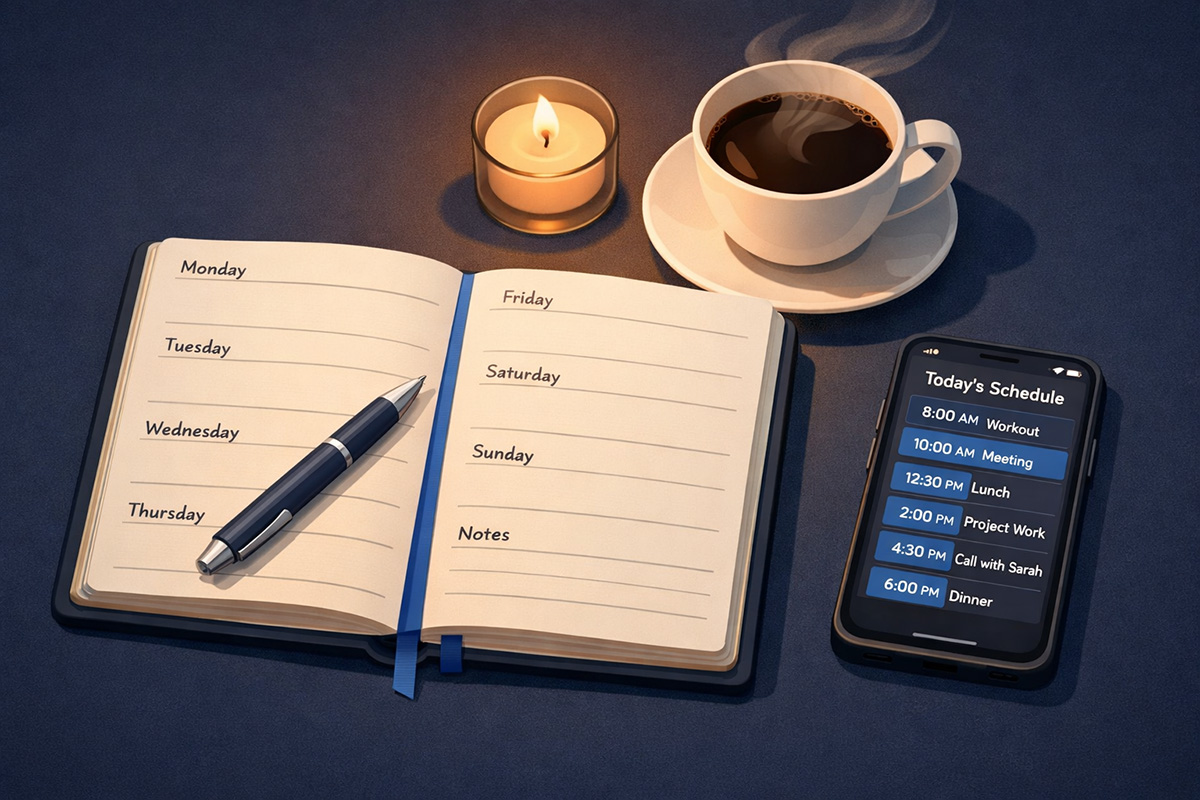
Something quiet happened on social media over the past two years. While productivity culture was busy celebrating 4 AM wake-ups and 90-minute morning routines, a gentler movement was racking up hundreds of millions of views. The hashtag #sundayreset has over half a billion tags on TikTok alone - and the content looks nothing like hustle culture. It's meal prep containers, freshly made beds, open planners, and people genuinely excited about the week ahead.
The Sunday reset isn't a new concept - productive people have been using end-of-week reviews for decades. But it has evolved into something more holistic: part weekly planning session, part self-care ritual, part mental declutter. And there's solid research explaining why it works so well.
This guide gives you a practical, research-backed framework for building a Sunday reset routine that actually sets you up for a better week - not just in theory, but in the real chaos of modern life.
Why Sunday Is the Most Important Productivity Day
Sunday carries a psychological weight that no other day does. Research consistently shows that over 70% of workers experience "Sunday Scaries" - anticipatory anxiety about the upcoming week - with 82% reporting the feeling before their workweek begins (Adobe Research, 2023). Among Gen Z, that number climbs to 94%. One in three professionals has considered quitting their job specifically because of Sunday anxiety.
Here's the key insight: Sunday anxiety isn't caused by the week itself. It's caused by uncertainty about the week. When you don't know what Monday looks like, your brain treats it as a threat. The amygdala activates. Cortisol rises. What should be a restful day becomes a low-grade stress experience.
The Sunday reset flips this dynamic. Instead of dreading an unknown week, you design it. You transform Sunday from the day before Monday into the first active day of your next chapter.
Top executives understand this intuitively. According to Harvard Business Review research, high-performing CEOs spend roughly 10 hours per week deliberately optimizing their routines - and strategic weekly planning is a non-negotiable component. Not because they have more time, but because they've learned that an unplanned week is an expensive one.
The Science Behind Weekly Planning
Weekly Planning Reduces Rumination
A 2023 field experiment published in the Journal of Occupational and Organizational Psychologystudied 208 employees across 947 weekly entries. The researchers manipulated weekly planning behaviour - having participants set goals, plan work steps, anticipate obstacles, and develop alternative plans - and measured outcomes over time.
The results were clear: weekly planning significantly reduced unfinished tasks and work-related rumination while increasing cognitive flexibility. The researchers noted that writing down each work step reduces employees' concern about forgetting tasks, providing a kind of "cognitive offloading" that frees mental bandwidth during evenings and weekends.
The Zeigarnik Effect: Why Unfinished Tasks Follow You Home
Psychologist Bluma Zeigarnik demonstrated in the 1920s that incomplete tasks occupy mental space more persistently than completed ones. This is why you lie awake thinking about the email you didn't send, not the report you finished. A Sunday planning session closes these mental loops - or at least captures them - so your brain can stop rehearsing them at 11 PM.
Implementation Intentions Cut Anxiety
Research on "implementation intentions" - specific if-then plans ("If it's Monday at 9 AM, then I'll start the quarterly report") - shows they meaningfully reduce anticipatory anxiety in high-anxiety populations. The act of deciding exactly when and how you'll do something removes the cognitive overhead of making those decisions in the moment, which is where stress compounds.
Planning and Perceived Control
Studies in health psychology consistently show that people who feel they have plans and support systems in place experience measurably lower stress, even when facing objectively difficult situations. Perceived control - the sense that you have agency over your week - is one of the strongest buffers against anxiety. A Sunday reset, at its core, is a control-building exercise.
The 5-Part Sunday Reset Routine
An effective Sunday reset isn't a marathon cleaning session or a perfectly curated aesthetic for Instagram. It's a structured sequence that covers five domains: review, priorities, scheduling,habits, and environment. Here's how to do each one.
Part 1: The 15-Minute Weekly Review
David Allen, creator of the Getting Things Done (GTD) methodology, calls the weekly review the "critical success factor" of the entire system. Without it, you're not managing your commitments - you're just reacting to whoever is loudest.
Your weekly review has three phases:
- Get Clear. Collect every loose end: open browser tabs, sticky notes, voicemails, unprocessed emails, mental to-dos. Dump everything into one list. Nothing should live only in your head.
- Get Current. Look at what you committed to last week. What did you finish? What didn't happen? Are there tasks to reschedule, delegate, or delete? Update your system so it reflects reality.
- Get Creative. Now that your head is clear, ask: what would make next week genuinely good? Is there a project you've been avoiding? A relationship you want to invest in? A goal you've been delaying?
This process takes 15 minutes when done regularly. Skip it for two weeks and it takes 45.
Part 2: Setting Your 3 Weekly Priorities
One of the most common weekly planning mistakes is writing a 20-item to-do list and calling it a plan. A list is not a strategy. A list tells you what exists; priorities tell you what matters.
The "Big 3" framework is simple and effective: identify three outcomes that would make next week a genuine success. Not tasks - outcomes. Not "reply to emails" but "move the product launch proposal forward." Not "go to the gym" but "exercise three times."
These three priorities become your filter for the week. When something new demands your attention, you ask: does this serve one of my three priorities? If not, it goes on a list for later. If yes, it earns time on your calendar.
Research from Harvard Business Review on executive time management found that top performers consistently protect time for their highest-priority work - not by being ruthless, but by being deliberate. The difference between a busy week and a productive week is usually clarity about what "done well" actually looks like.
Part 3: Scheduling Your Week on a Daily Planner
A priority without a time slot is a wish. This step turns your Big 3 into calendar reality.
Time blocking is the practice of assigning specific time slots to specific tasks - treating your calendar like a series of appointments with your future self. Instead of working from a vague to-do list and picking tasks reactively, you walk into Monday already knowing what 9 AM, 11 AM, and 2 PM look like.
- Open your calendar and review all fixed commitments for the week (meetings, appointments, classes).
- Identify your two or three best focus windows - times when you're naturally alert and undisturbed.
- Block those windows for your top weekly priorities first, before scheduling anything else.
- Schedule recurring tasks (email, admin, exercise) in the remaining time.
- Build in one buffer block per day for the unexpected.
Part 4: Habit and Goal Check-in
Sunday is the best day to review the long game. Daily habits are the building blocks of any meaningful goal, and a weekly check-in gives you the perspective that daily tracking can't.
Ask yourself:
- Which habits did I complete consistently last week?
- Which habits did I miss, and what got in the way?
- Are my current habits actually serving my goals, or am I tracking things out of habit?
- Is there one habit I want to focus on building this week?
Research on habit formation (UCL, 2010) found that habits take an average of 66 days to become automatic - not the commonly cited 21. More importantly, the study found that missing one day didn't significantly derail habit formation, but losing the thread entirely did. A Sunday check-in is your early warning system: it catches a bad streak at two days rather than two weeks.
This is also the moment to check in on step goals, fitness targets, and any health-related metrics you're tracking. Looking at seven days of data gives you a much more accurate picture than any single day can.
Part 5: Preparing Your Environment
Your environment shapes your behaviour more than your willpower does. Research by BJ Fogg and others in behaviour design consistently shows that reducing friction - making the right behaviour easier - is far more effective than relying on motivation.
Sunday environment prep doesn't need to be a deep clean. It's targeted: remove the obstacles you know will exist on Monday morning.
- Workspace: Clear your desk, close unnecessary browser tabs, prepare any materials you'll need for Monday's focus block.
- Kitchen: Meal prep at least two or three days of lunches or breakfasts. Decision fatigue around food is real - eliminating it frees cognitive resources for actual work.
- Clothes and kit: Lay out Monday's outfit, pack your gym bag, set out your running shoes if you plan to exercise.
- Notifications: Review your phone notifications and silence anything that will fragment your focus during the week's most important work blocks.
- Sleep: Aim to be in bed by a consistent time on Sunday. Research shows that Sunday night sleep quality has an outsized effect on the entire week - it resets your circadian rhythm after the weekend drift.
How Long Should a Sunday Reset Take?
One of the most common objections to a Sunday reset is: "I don't want to spend my whole Sunday being productive." It's a fair concern. Rest is not optional - it's part of the system.
The good news is that an effective Sunday reset takes between 45 minutes and 2 hours, depending on how much you include. Here's a rough breakdown:
- Weekly review: 15 minutes
- Setting Big 3 priorities: 10 minutes
- Scheduling the week: 15–20 minutes
- Habit and goal check-in: 10 minutes
- Environment prep: 15–60 minutes (depending on meal prep, cleaning)
The planning components - review, priorities, scheduling, habit check-in - take under an hour combined. Environment prep is where the time expands if you let it, but even a light version (wiping down your desk, prepping one meal) takes only 20 minutes.
Critically: a Sunday reset is not supposed to colonize the whole day. Schedule it for a specific window - say, 4 PM to 5:30 PM - so the rest of your Sunday remains genuinely free for rest, connection, or whatever restores you. The reset works best when it has a beginning and an end.
- Brain dump - capture all open loops and loose ends
- Review last week - what was completed, what wasn't
- Set 3 weekly priorities (outcomes, not tasks)
- Block time for top priorities on your calendar
- Schedule recurring commitments and exercise
- Review habit tracker - identify patterns
- Set intentions for one habit to focus on
- Prep workspace for Monday
- Meal prep (at least 2–3 days)
- Set consistent bedtime for tonight
Sunday Reset for Different Lifestyles
For Students
Students face a specific challenge: their weeks are highly variable (exam weeks vs. quiet weeks), their work is often self-directed, and the line between weekend and weekday is blurry. Sunday anxiety is acutely felt - a 2024 survey found that Gen Z experiences Sunday Scaries at higher rates than any other generation.
A student Sunday reset should focus heavily on the weekly review (which assignments are due when?) and time blocking around fixed class schedules. Even 30 minutes spent mapping the week on Sunday evening dramatically reduces the Monday panic of realizing something was due at 9 AM.
The habit check-in is especially valuable for students: sleep, exercise, and regular study sessions are the three habits that most reliably predict academic performance - and they're the first to collapse under stress.
For Remote Workers
Remote workers face the boundary problem: without a physical commute, work and life blend in ways that erode recovery. The Sunday reset is especially powerful here because it createsthe structure that the office used to provide.
For remote workers, the environment prep component matters more than for anyone else. Setting up a clean, distraction-free workspace on Sunday signals to your brain that work starts here, at this desk, at this time - and not everywhere, all the time.
Time blocking is also critical. Remote workers who don't protect deep work blocks find their week colonised by Slack, meetings, and small reactive tasks. A Sunday scheduling session is the moment to defend your calendar before others fill it.
For Parents
Parents operate one of the most logistically complex weekly systems imaginable - and they're rarely planning for just themselves. A family Sunday reset adds layers: kids' activities, shared calendars, meal planning for five people, school prep.
The key for parents is ruthless simplification. You don't need a perfect reset - you need afunctional one. Twenty minutes of meal prep, ten minutes of calendar review, and one conversation with your partner about the week's logistics is infinitely better than nothing.
Many parents find that their own priorities are chronically deprioritized during the week. The Sunday Big 3 exercise is a useful prompt: alongside the family logistics, identify one thing that matters to you and find a time slot for it before the week begins.
Common Sunday Reset Mistakes to Avoid
Treating It as Another Workday
A Sunday reset is planning for the week ahead - it is not starting the week early. If you find yourself answering emails, handling actual work tasks, or feeling resentful about "losing" Sunday, you've crossed a line. The reset should feel like preparation, not labour.
Planning Without Scheduling
Writing a list of goals and intentions without putting them on a calendar is one of the most common productivity mistakes. Intentions without time slots don't become action - they become guilt. Every priority you identify needs a home: a specific day and time block.
Over-Planning
A week scheduled to 100% capacity is a week that falls apart on Tuesday. Leave 20–30% of your time unscheduled to absorb the inevitable disruptions, urgent requests, and tasks that take longer than expected. A realistic plan you follow beats an ambitious plan you abandon.
Skipping the Review
Many people jump straight to planning without reviewing the previous week. This is a mistake. Without reviewing what actually happened, you can't identify patterns (I consistently overestimate how much I can do on Fridays), close open loops, or learn from what worked. The review is the part that makes planning progressively smarter over time.
Making It All-or-Nothing
If you can't do the full routine, many people do nothing. This is exactly backwards. A 20-minute abbreviated reset - just the review and Big 3 - is exponentially better than skipping it entirely. Keep a minimum viable version in your back pocket for the Sundays when life is genuinely packed.
Neglecting Recovery
The Sunday reset is not supposed to eliminate rest - it's supposed to protect it. If your reset is so intensive that you feel more tired at the end than the beginning, you've built the wrong routine. Rest, connection, and time without an agenda are not the enemies of productivity. They're the fuel. Schedule the reset to preserve Sunday, not consume it.
The Sunday reset trend resonated so deeply on social media because it addresses a genuine pain point: most people start their week already behind, already anxious, already reactive. A structured Sunday routine offers a real alternative - not a hustle hack, but a genuine transition ritual that separates last week from next week.
The research is clear: weekly planning reduces rumination, improves engagement, and builds the sense of control that buffers against stress. The specific format matters far less than the consistency. Start with 30 minutes. Review your week, pick three priorities, block some time. That alone will change how Monday feels.
Tools like SparkDay make the scheduling and habit check-in steps fast and frictionless - your daily planner, habit tracker, and reminders are all in one place, so Sunday planning doesn't require juggling five different apps. But the most important ingredient is simply showing up for yourself, every Sunday, with a little intention and a blank calendar.
The week isn't going to plan itself. You might as well make it a good one.
Frequently Asked Questions
What is a Sunday reset routine?
A Sunday reset is a weekly ritual where you clean your space, review the past week, plan the week ahead, prep meals or outfits, and set intentions. It's based on the Fresh Start Effect - using temporal landmarks to reset motivation and build momentum.
How long does a Sunday reset take?
Most people spend 1-2 hours total, though you can do a minimalist version in 30 minutes. The key is covering all five areas: physical space, mental clarity, weekly planning, self-care, and preparation. Start small and expand once it becomes a habit.
What should be on my Sunday reset checklist?
A good checklist includes: tidy your living space, do laundry, meal prep or plan meals, review your calendar for the week, set 3 weekly priorities, lay out Monday's outfit, and do one self-care activity (journaling, a walk, or a bath). Customize based on what reduces your Monday anxiety most.
Does a Sunday reset actually help with Monday anxiety?
Yes. Research on the Fresh Start Effect shows that structured weekly transitions reduce anxiety about upcoming demands. When you've already reviewed your calendar and set priorities, Monday morning becomes execution rather than scrambling. The predictability itself is calming.
Can I do a reset on a different day?
Absolutely. Sunday works for most people because it's the natural transition between weeks, but Saturday or even Friday evening works too. The Fresh Start Effect applies to any consistent weekly boundary. A good planner app can help you schedule and stick to your weekly reset regardless of which day you choose.
Ready to Take Control of Your Day?
SparkDay combines daily planning, step tracking, habit building, and focus timers in one free app.